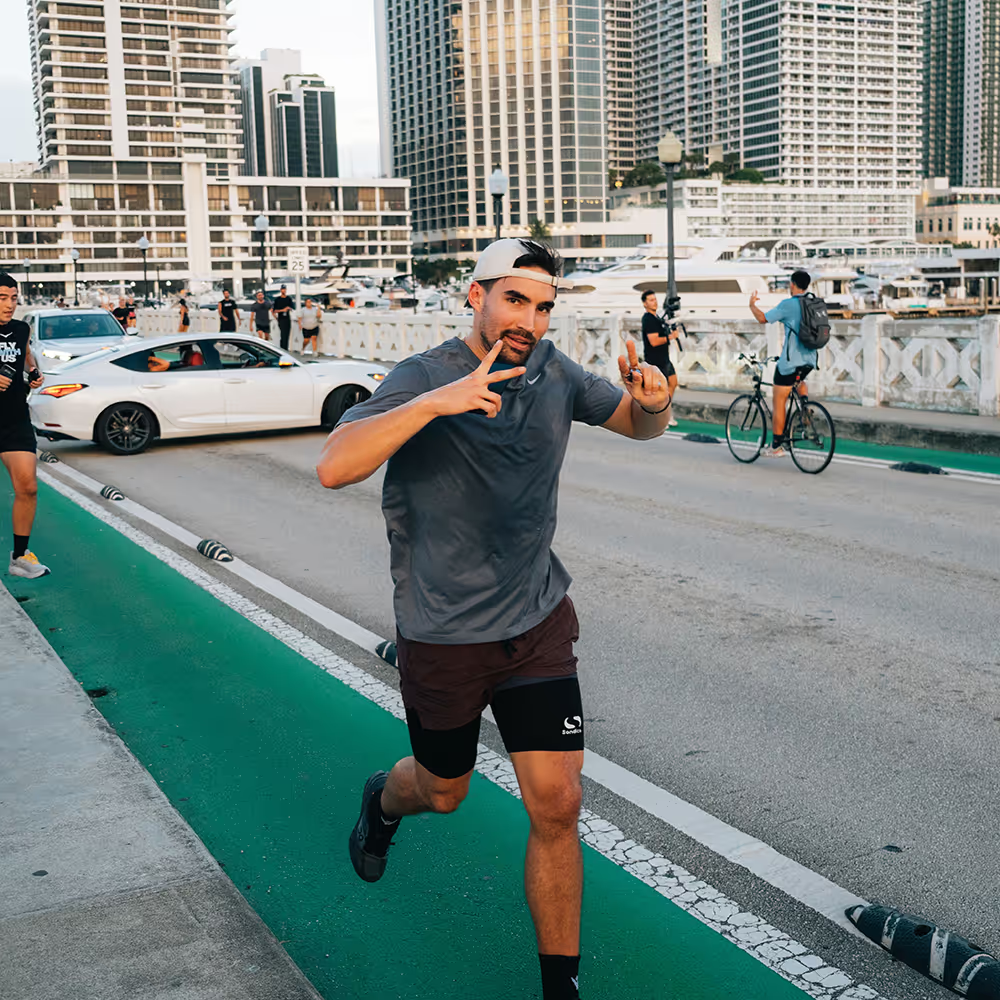
Luca is an active hybrid-athlete who participates in long-distance events along with a variety of sports. Nutrition has helped him reach excellent physical condition.
What to eat after training: The recovery meal that actually matters
Learn what to eat after workouts to repair muscle, restore energy, and recover faster.

Your workout doesn't end when you finish your last rep, it ends when you've properly refueled. What you eat in the hour or two after training determines whether your body repairs efficiently or stays stuck in recovery mode.
I used to skip post-workout meals during heavy training blocks, thinking I'd "make up for it at dinner." My performance plateaued, soreness lingered longer, and I constantly felt drained. Once I dialed in my recovery nutrition, everything improved.
Here's how to refuel the right way.
Why post-workout nutrition matters
During exercise, your muscles deplete glycogen stores and sustain micro-damage. This is normal—it's how you get stronger. But without proper nutrition, your body struggles to:
- Replenish energy (glycogen)
- Rebuild muscle tissue (protein synthesis)
- Reduce inflammation and soreness
- Prepare for your next session
Research shows that consuming protein and carbohydrates within 1-2 hours of exercise accelerates recovery and maximizes muscle protein synthesis. Your body is primed to absorb nutrients during this window—use it.
The 3 R's of recovery nutrition
Refuel: 1.0–1.2 g of carbs per kg of body weight
Replace the glycogen you burned. For me at 75 kg, that's roughly 75-90g of carbs. Don't skip carbs just because you're trying to "stay lean"—they're essential for recovery.
Repair: 20–40 g of protein
Trigger muscle protein synthesis and rebuild tissue. Higher end for intense strength sessions, lower end for moderate workouts.
Rehydrate: 16–24 oz of fluid per pound of sweat lost
Weigh yourself before and after training to gauge losses. If you dropped 2 pounds, aim for 32-48 oz of water or an electrolyte drink.
When to eat after training
The "anabolic window" isn't as strict as old-school bodybuilding advice made it seem. You don't need to chug a shake in the locker room.
That said: Eating within 45-90 minutes post-workout is still ideal, especially if:
- You trained hard or for over an hour
- You're training again within 24 hours
- You didn't eat much before your workout
If you can't eat a full meal right away, a shake or snack works. Just don't skip it entirely.
What I actually eat post-workout
Full meals (when I have time):
- Grilled chicken with rice and roasted vegetables
- Turkey sandwich on whole-grain bread with a banana
- Salmon with sweet potatoes and spinach
- Pasta with lean ground beef and marinara
Quick options (when I'm on the go):
- Chocolate milk (3:1 carb-to-protein ratio, ready to drink)
- Protein shake with banana, oats, and almond milk
- Greek yogurt with granola and berries
- Peanut butter and jelly on whole wheat bread
Real food is always my preference, but shakes are a solid backup when I'm short on time.
Common recovery mistakes
These habits slow progress and leave you feeling worse:
❌ Skipping food after training – Your muscles need fuel. Period.
❌ Only eating protein, no carbs – Protein alone doesn't replenish glycogen. You need both.
❌ Over-relying on supplements – Shakes are convenient, but whole foods provide more complete nutrition.
❌ Not drinking enough water – Dehydration kills performance and slows recovery.
The bottom line
Post-workout nutrition isn't optional if you're serious about getting stronger, faster, or more resilient. Your body is ready to recover—give it what it needs.
Prioritize whole foods when possible. Get both carbs and protein. Hydrate properly. Keep it simple and consistent.
Recovery is where progress happens. Don't waste your hard work by skipping this step.
— Luca
References
- International Society of Sports Nutrition (2017). Position stand: Nutrient timing.
- American College of Sports Medicine (2016). Nutrition and athletic performance.
- Phillips SM (2014). Protein synthesis and recovery in athletes.
FAQ's
Eat better. Feel better. Perform better.
Discover healthy recipes, plan meals, create shopping lists, and track macros — all in one app.
