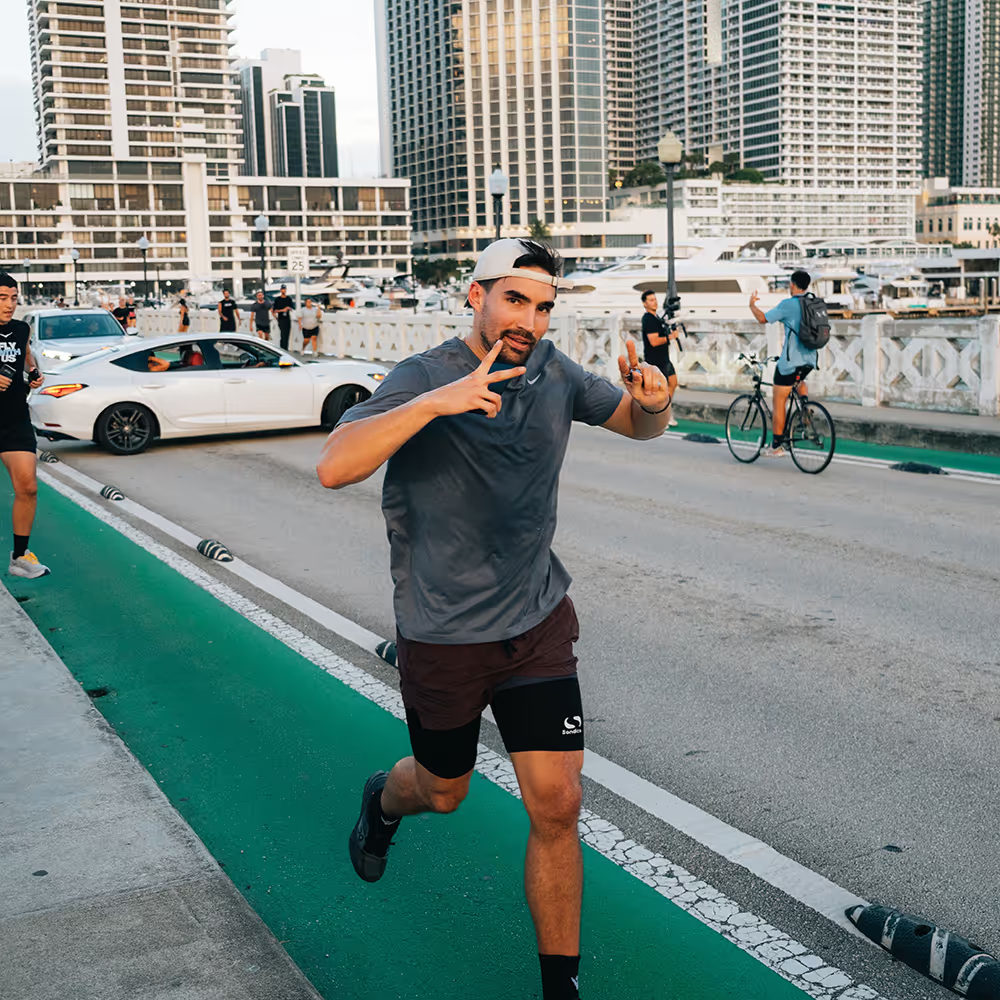
Luca is an active hybrid-athlete who participates in long-distance events along with a variety of sports. Nutrition has helped him reach excellent physical condition.
Balancing strength and endurance nutrition as a hybrid athlete
Learn how to balance nutrition for strength and endurance training with this science-backed hybrid athlete guide.

Training for both strength and endurance—what's often called "hybrid training"—creates a unique nutritional challenge. You need enough fuel for long runs or rides, but also enough protein and recovery to build and maintain muscle. Under-fuel either side, and your performance suffers.
As I prep for an Ironman while maintaining my strength training, I've had to figure out how to eat for both without constantly feeling depleted or losing muscle. Here's what actually works.
Why hybrid athletes need a different approach
Endurance training burns through glycogen and demands high carbohydrate intake. Strength training breaks down muscle tissue and requires adequate protein for repair and growth.
When you're doing both, you need:
- More total calories than single-sport athletes
- Strategic timing to fuel the right energy system at the right time
- Adequate protein despite high carb needs
- Smart recovery to avoid chronic fatigue
The biggest mistake hybrid athletes make is under-eating—trying to stay lean while training for both strength and endurance. This leads to poor recovery, stalled progress, and eventually burnout or injury.
Daily macronutrient targets
These are general guidelines. Adjust based on your training volume, body weight, and how you feel.
Carbohydrates: 4-7 g per kg bodyweight
Higher on endurance-heavy days (6-7 g/kg), moderate on strength-focused days (4-5 g/kg). For me at 75 kg, that's 300-525g depending on the day's training.
Protein: 1.6-2.2 g per kg bodyweight
Hybrid athletes need more protein than pure endurance athletes to maintain muscle mass. I aim for about 120-150g daily (1.6-2.0 g/kg).
Fats: 20-30% of total calories
Don't go too low. Fats support hormone production, which matters when you're training hard in multiple modalities. Focus on sources like avocado, nuts, olive oil, and fatty fish.
Total calories: Expect to eat significantly more than you think. I'm consuming 3,000-3,500 calories daily during heavy training blocks. Track for a week if you're unsure—you might be surprised how much you actually need.
Timing your nutrition around training
Endurance days (running, cycling, swimming):
- Pre-workout: Carb-focused meal 2-3 hours before (oatmeal, toast, fruit)
- During: 30-60g carbs per hour for sessions over 90 minutes
- Post-workout: Carbs + moderate protein (3:1 or 4:1 ratio)
Strength days (lifting, resistance training):
- Pre-workout: Balanced meal with carbs and protein 1-2 hours before
- Post-workout: Protein-focused with carbs (20-40g protein, moderate carbs)
Combined training days (both in one day):
- Prioritize carbs around your endurance session
- Ensure adequate protein after strength work
- Increase overall calorie intake to account for both sessions
When I do a morning run followed by an evening lift, I eat a carb-heavy breakfast, moderate lunch, then protein-focused dinner. The key is fueling each session appropriately without under-eating overall.
Sample day of eating
This is what a typical high-volume training day looks like for me:
Breakfast (post-morning run):
Oatmeal with banana, berries, honey, and a scoop of protein powder
~600 calories | 80g carbs | 30g protein | 15g fat
Mid-morning snack:
Greek yogurt with granola
~300 calories | 40g carbs | 20g protein | 8g fat
Lunch:
Chicken rice bowl with vegetables and avocado
~700 calories | 85g carbs | 45g protein | 20g fat
Pre-workout snack (before evening lift):
Banana with peanut butter
~250 calories | 35g carbs | 8g protein | 10g fat
Dinner (post-lift):
Salmon with sweet potato and roasted broccoli
~650 calories | 60g carbs | 50g protein | 22g fat
Evening snack:
Protein smoothie with fruit
~300 calories | 40g carbs | 25g protein | 5g fat
Daily total: ~2,800 calories | 340g carbs | 178g protein | 80g fat
On lower-volume days, I reduce portions slightly but keep protein consistent.
Common challenges and solutions
Challenge: Feeling too full to train
Solution: Spread meals throughout the day. Eat smaller, more frequent meals rather than three massive ones. Liquid calories (smoothies, shakes) can help if you struggle to eat enough solid food.
Challenge: Losing muscle despite strength training
Solution: You're probably under-eating protein or total calories. Track your intake for a week. Aim for at least 1.6g protein per kg bodyweight and ensure you're in a slight caloric surplus or at maintenance.
Challenge: Poor endurance performance despite eating enough carbs
Solution: Check your timing. Are you fueling properly before and during long sessions? Also consider overall fatigue—you might need a deload week to recover.
Challenge: Constant fatigue and poor recovery
Solution: This is usually a sign of chronic under-eating. Increase total calories by 200-300 daily for two weeks and monitor how you feel. Also evaluate sleep quality and stress levels.
What to prioritize on different training days
Heavy endurance day (long run, long ride):
- Carbs are king
- Moderate protein
- Fuel during the session if it's over 90 minutes
Heavy strength day (max effort lifting, volume work):
- Prioritize protein
- Still need adequate carbs for energy and recovery
- Don't skimp on post-workout nutrition
Light training or rest day:
- Keep protein consistent
- Reduce carbs slightly but don't eliminate them
- Focus on recovery nutrition and micronutrients
Double session day (endurance + strength):
- Highest calorie intake
- Time carbs around endurance work
- Ensure protein after strength work
- Don't under-eat—you need significantly more fuel
Supplements that actually help
I'm not big on supplements, but these make a difference for hybrid training:
Protein powder: Convenient way to hit daily protein targets without excessive eating
Creatine: 5g daily supports strength performance and may help with high-intensity intervals
Electrolytes: Essential for long endurance sessions to maintain hydration and prevent cramping
Omega-3s: Reduce inflammation from high training volume (I prefer whole fish but supplement when needed)
Everything else—eat real food first.
Common questions
Do I need more protein than pure strength athletes?
Not necessarily more than dedicated bodybuilders, but more than typical recommendations for endurance athletes. Aim for 1.6-2.2 g/kg bodyweight to support both muscle maintenance and recovery from high training volumes.
How do I avoid gaining unwanted weight while eating so much?
Focus on nutrient-dense whole foods. Track your weight weekly and adjust portions if you're gaining too quickly. Some weight gain is normal when increasing training volume—don't confuse necessary fuel with "getting fat."
Can I do low-carb as a hybrid athlete?
Technically yes, but it's not optimal. Endurance performance suffers without adequate carbs, and you'll likely feel terrible during hard sessions. Some athletes use targeted low-carb periods during base training, but it's not something I recommend for most people.
Should I periodize my nutrition like I periodize my training?
Yes. Eat more during high-volume blocks, scale back slightly during deload weeks, and adjust macros based on whether you're emphasizing strength or endurance in that training phase.
The bottom line
Hybrid training demands more from your body than single-sport training. You can't eat like a pure endurance athlete (not enough protein, too lean) or like a pure strength athlete (not enough carbs for endurance work).
The key is eating enough total calories, timing your carbs strategically around endurance sessions, maintaining consistent protein intake, and not being afraid to eat more than you think you need.
I've learned this through trial and error—undereating set my training back more than any workout ever could. Once I started fueling properly for both strength and endurance, my performance in both improved dramatically.
Eat to support your training, not to maintain an aesthetic. Your performance will show the difference.
— Luca
References
- Areta JL et al. (2013). Timing and distribution of protein ingestion during prolonged recovery from resistance exercise. Journal of Physiology.
- Burke LM et al. (2018). Low carbohydrate, high fat diet impairs exercise economy in elite race walkers. Journal of Applied Physiology.
- Phillips SM & Van Loon LJ (2011). Dietary protein for athletes: From requirements to optimum adaptation. Journal of Sports Sciences.
FAQ's
Eat better. Feel better. Perform better.
Discover healthy recipes, plan meals, create shopping lists, and track macros — all in one app.
